Precision Manufacturing | Porous Structures | Customization on a Per-Unit Basis

Health

Gicam technology can use DED laser manufacturing to produce biological features that are difficult to achieve by other means: gradient-porous structures, bifunctional surfaces, and implants customized to the patient’s anatomy. Here, the focus is less on repair and more on precision manufacturing, in accordance with biocompatibility requirements and regulatory traceability standards.
Adding Functions

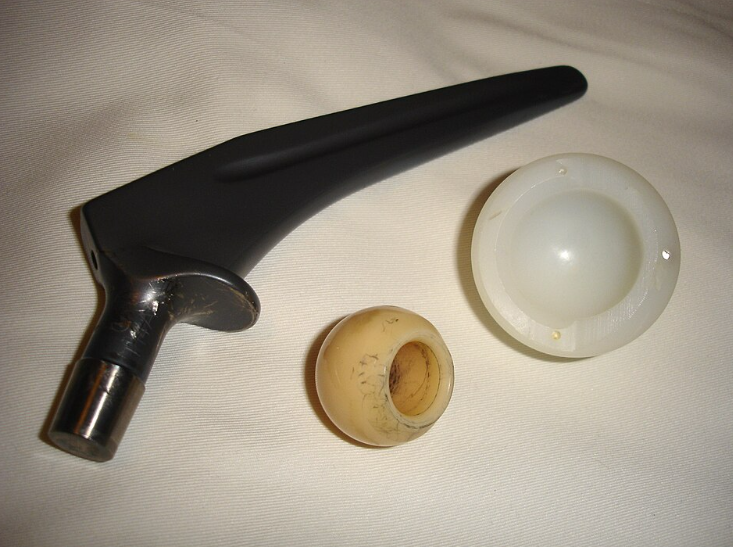
Femoral stems for hip replacements

Promoting bone integration while maintaining controlled stiffness at the core: a graded porosity that cannot be achieved through conventional machining or plasma coating.
These titanium implants are designed to promote osseointegration (bone growth into the implant) at their anchorage site in the femur, while maintaining controlled stiffness at the core to prevent “stress shielding” (bone resorption due to improper load transfer). DED allows a porous structure or a porosity gradient to be deposited directly onto the anchorage zone—a result that cannot be achieved through conventional machining or traditional plasma coating.

This approach improves the implant’s long-term biological fixation, reducing the risk of loosening, a major cause of revision surgery. The process also allows for localized customization of porosity based on the patient’s bone morphology, in line with the principles of personalized medicine.

Graduated porosity → Porous structure deposited directly onto the anchorage area.
Long-term fixation → Lower risk of loosening, a major cause of reoperation.
Femoral stems for hip replacements
Photo: Nuno Nogueira - Wikimedia Commons — License — modified image

FAQ

What is “stress shielding”?

This is bone resorption caused by an improper load transfer between the implant and the bone. Controlled stiffness in the center of the stem, combined with a porous anchorage zone, helps prevent this.

Can porosity be tailored to the patient?