
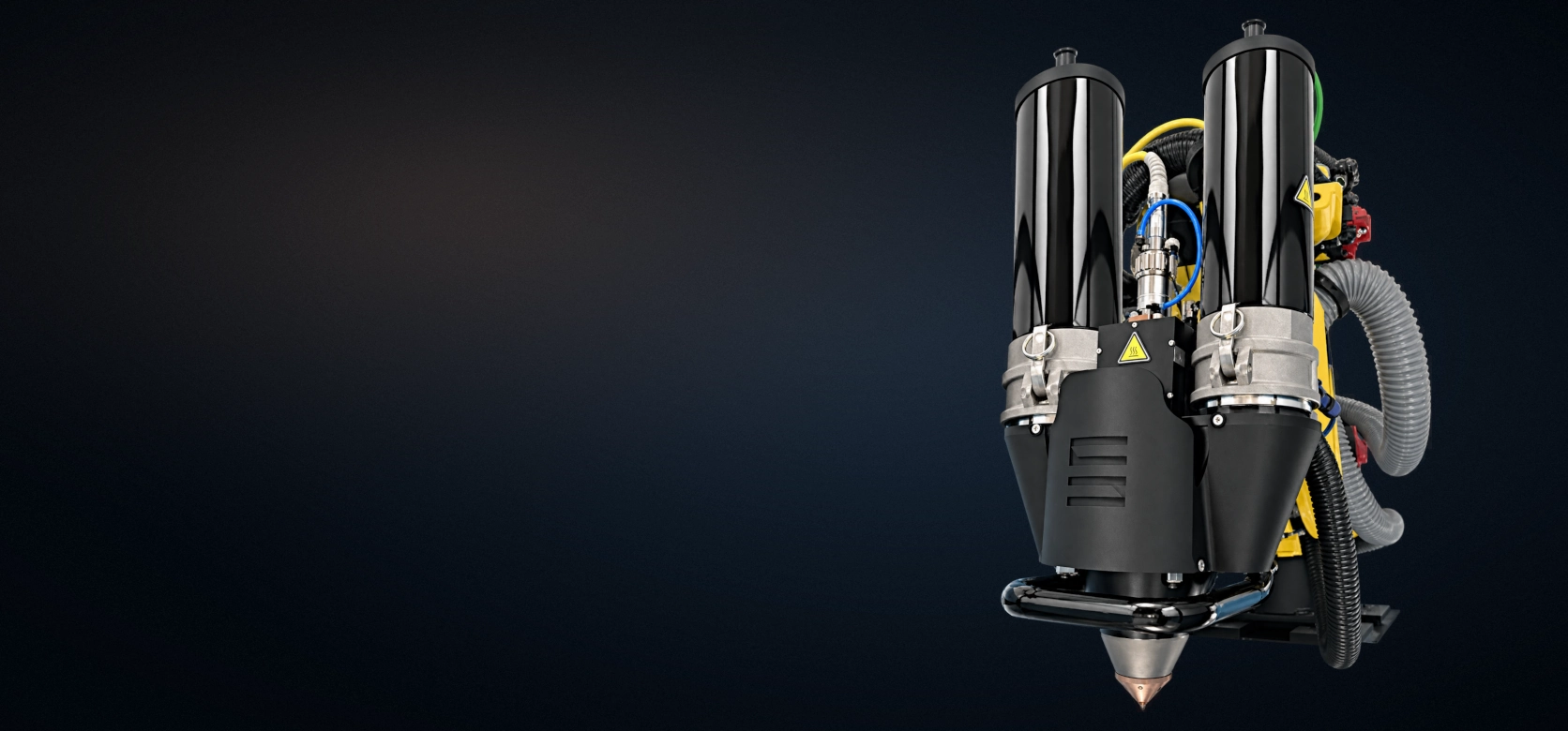
Gicam Specials

Specialized machines for non-standard applications

Research and Innovation
Gicam Synchrotron
Gicam Lab

Research & Development, Training, Ultra-Compact Design

Designed for laboratories and training centers: Gicam DED technology, in an ultra-compact, portable format, with full access to process data for your research projects.

More information →

  • ✓Multi-head: wire, powder
  • ✓Full process data access for research
  • ✓Operator training included
  • ✓Selected by prestigious research laboratories, including École Polytechnique
Ultra-compact
Gicam Mini 

Small, precision parts; ultra-compact size

For workshops with a small footprint, cleanrooms, or applications requiring maximum deposition precision on small parts—without compromising on the DED technology of the Gicam line.

More information →
  • ✓Compact design — fits anywhere
  • ✓Maximum deposition accuracy
  • ✓Ideal for: industrial, medical, and aerospace jewelry
  • ✓Patented rotating nozzle and native dual-material feed system
XL
Gicam XLGicam DED/Hybrid

Very large rooms — custom-sized spaces

Customized solutions when the standard catalog is no longer sufficient: the Gicam XL for very large volumes (shipbuilding, energy, heavy forging, civil engineering), and the Gicam DED/Hybrid for combining deposition and machining in a single cell.

More information →

  • ✓Volume tailored to specifications — no standard limit
  • ✓Repair of shafts, rotors, and heavy dies
  • ✓Turnkey integration with team training
  • ✓DED Hybridization/Machining

Gicam Synchrotron / Gicam Labo:
A leader in the academic world

A research laboratory has neither the space nor the need for an industrial production cell: what matters is being able to explore a process with precision, quickly change experimental configurations, and move the equipment from one lab bench to another as needed. The Gicam Synchrotron / Labo
meets this requirement exactly—it features the same patented rotating nozzle and native dual-material feed system as the rest of the Gicam line, in a machine compact enough to be moved without extensive logistics.
Its multi-head versatility (wire, powder) and full access to process data make it a tool particularly well-suited for materials science research: every deposition parameter can be monitored and documented, a key requirement for reproducible and publishable scientific work.
It is this high standard that makes it a benchmark in the academic world.
Printing Technology
DED laser nozzle for wire (WLAM) or powder (LMD). Patented rotary laser printing nozzle (up to 50% material savings, fast manufacturing, optimized energy consumption).
Raw material feed (powders or wires) integrated into the head, as close as possible to the process. Interchangeable laser deposition head.
Laser Technology
Diode or fiber laser, 0.5 to 3 kW (or higher as an option), red or blue wavelength.
Laser spot diameter adjustable via control panel—from 1.5 mm to 3 mm as standard, starting at 0.3 mm upon request. Adjust the deposition precision for each application without changing tools.
Patented rotating nozzle
Can be positioned in any orientation thanks to the rotary system with a standoff of >15 mm. Access to complex geometries without compromise—a decisive advantage over fixed 3-jet nozzles.
Average powder utilization: 70%.
Wire & powder — same machine
Change the print head in just a few minutes: switch from WLAM mode (wire laser, heavy parts, repairs) to LMD mode (powder laser, precision, complex alloys) without any structural modifications. Material deposition rate: up to 1.5 kg/h, depending on the material.
Dual material delivery system
Patented dual-material feeding system: powders or wires.
For each type of material, a dual powder feeder and a dual wire feeder enable the production of parts composed of two materials (for example, a steel core coated with a Stellite surface) or the creation of material blends in precise and variable proportions.
Patented multi-dispenser for powder
Plug-and-play tanks in various sizes. Simultaneous feeding of two powders (see more) with real-time adjustment of proportions—gradual composition gradients, two-component systems without abrupt interfaces.
Process Control and Management
Le logiciel embarqué SotiMind supervise et contrôle l'ensemble du process et de l'environnement : flux, pressions, débits, alimentation matière, refroidissement, gaz de protection/transport, point de rosée, l’hygrométrie, température, etc.
Real-time monitoring
Dual optical cameras (process + general monitoring), monitoring of flow, pressure, flow rate, dew point, humidity, and temperature in the powder tanks.
Remote Monitoring
It can be connected to SotiGate, Sotimeco's monitoring platform, which analyzes and displays in real time data from the machine's core and the manufacturing process.
FAO & Integration
Compatible with leading CAM software: RhinoRobot, Adaone, NX… Control interface with control panel and dual monitors.
Computer Numerical Control
Linux CNC + SotiMind control system.
6-axis X/Y/Z technology: 3 axes for the print head + 3 axes for the rotary table, allowing the model and the nozzle to be constantly reoriented to avoid the creation of support structures, which consume time and material.
Access to process data useful for research
Technical specifications, sampling rates, and measurement ranges provided to research teams to supplement their own experimental protocols rather than replace their instrumentation.

Gicam Mini:
Precision in an ultra-compact design

Some parts do not require high production volumes but, on the contrary, demand extremely precise control over the deposition process: industrial jewelry, implantable medical components, and small precision aerospace parts. The Gicam Mini is designed specifically to meet this need—it features the same patented rotating nozzle and native dual-material feed system as the rest of the Gicam lineup, in a footprint reduced to a minimum, making it compatible with a cleanroom or a workshop with limited space.
The laser spot diameter, adjustable down to 0.3 mm upon request, enables a level of deposition precision unattainable by larger machines—a decisive advantage for small parts in laser DED manufacturing and repair, where every tenth of a millimeter counts.
It is this level of precision that makes it the benchmark for additive manufacturing of demanding small parts.
Printing Technology
DED laser nozzle for wire (WLAM) or powder (LMD). Patented rotary laser printing nozzle (up to 50% material savings, fast manufacturing, optimized energy consumption).
Raw material feed (powders or wires) integrated into the head, as close as possible to the process. Interchangeable laser deposition head.
Laser Technology
Diode or fiber laser, 0.5 to 3 kW (or higher as an option), red or blue wavelength.
Laser spot diameter adjustable via control panel—from 1.5 mm to 3 mm as standard, starting at 0.3 mm upon request. Adjust the deposition precision for each application without changing tools.
Patented rotating nozzle
Can be positioned in any orientation thanks to the rotary system with a standoff of >15 mm. Access to complex geometries without compromise—a decisive advantage over fixed 3-jet nozzles.
Average powder utilization: 70%.
Wire & powder — same machine
Change the print head in just a few minutes: switch from WLAM mode (wire laser, heavy parts, repairs) to LMD mode (powder laser, precision, complex alloys) without any structural modifications. Material deposition rate: up to 1.5 kg/h, depending on the material.
Dual material delivery system
Patented dual-material feeding system: powders or wires.
For each type of material, a dual powder feeder and a dual wire feeder enable the production of parts composed of two materials (for example, a steel core coated with a Stellite surface) or the creation of material blends in precise and variable proportions.
Patented multi-dispenser for powder
Plug-and-play tanks in various sizes. Simultaneous feeding of two powders (see more) with real-time adjustment of proportions—gradual composition gradients, two-component systems without abrupt interfaces.
Process Control and Management
Le logiciel embarqué SotiMind supervise et contrôle l'ensemble du process et de l'environnement : flux, pressions, débits, alimentation matière, refroidissement, gaz de protection/transport, point de rosée, l’hygrométrie, température, etc.
Real-time monitoring
Dual optical cameras (process + general monitoring), monitoring of flow, pressure, flow rate, dew point, humidity, and temperature in the powder tanks.
Remote Monitoring
It can be connected to SotiGate, Sotimeco's monitoring platform, which analyzes and displays in real time data from the machine's core and the manufacturing process.
FAO & Integration
Compatible with leading CAM software: RhinoRobot, Adaone, NX… Control interface with control panel and dual monitors.
Computer Numerical Control
Linux CNC + SotiMind control system.
6-axis X/Y/Z technology: 3 axes for the print head + 3 axes for the rotary table, allowing the model and the nozzle to be constantly reoriented to avoid the creation of support structures, which consume time and material.
Integration
Optimized footprint, suitable for a cleanroom or a workshop with limited space.

Gicam XL, Gicam DED/Hybrid:
Custom Solutions: When the Standard Catalog Is No Longer Enough

By their very nature, some projects fall outside the scope of a standard machine—either because the part to be processed far exceeds typical sizes, or because the manufacturing process requires a seamless sequence of deposition and machining without rework. Sotimeco offers two families of custom solutions to meet these needs.

The Gicam XL is designed for the naval, defense, energy, steel, and specialty fabrication sectors, where the required workload far exceeds the capabilities of the standard product line. Its kinematics, table load capacity, and CNC control (Siemens, Fanuc, LinuxCNC, etc.) are customized with the customer based on the parts to be processed—such as shafts, rotors, and heavy dies.

The Gicam DED/Hybrid addresses another challenge: integrating a DED deposition head and a machining center into a single cell. These machines are primarily designed for use on ships, in theaters of operations, on oil platforms, and in maintenance areas—where a full-scale machining shop is not available. Rather than moving the part between two separate machines, it allows for direct deposition followed by machining, without rework or loss of reference—saving time and ensuring greater precision on complex parts with hybrid geometries (machined base, addition of functional material, and immediate finishing).

In both cases, the underlying technology remains the same as that of the entire Gicam range: patented rotary nozzle, native dual-material feed, and process monitoring—only the architecture changes to adapt to the project’s requirements.
Printing Technology
DED laser nozzle for wire (WLAM) or powder (LMD). Patented rotary laser printing nozzle (up to 50% material savings, fast manufacturing, optimized energy consumption).
Raw material feed (powders or wires) integrated into the head, as close as possible to the process. Interchangeable laser deposition head.
Laser Technology
Diode or fiber laser, 0.5 to 3 kW (or higher as an option), red or blue wavelength.
Laser spot diameter adjustable via control panel—from 1.5 mm to 3 mm as standard, starting at 0.3 mm upon request. Adjust the deposition precision for each application without changing tools.
Patented rotating nozzle
Can be positioned in any orientation thanks to the rotary system with a standoff of >15 mm. Access to complex geometries without compromise—a decisive advantage over fixed 3-jet nozzles.
Average powder utilization: 70%.
Wire & powder — same machine
Change the print head in just a few minutes: switch from WLAM mode (wire laser, heavy parts, repairs) to LMD mode (powder laser, precision, complex alloys) without any structural modifications. Material deposition rate: up to 1.5 kg/h, depending on the material.
Dual material delivery system
Patented dual-material feeding system: powders or wires.
For each type of material, a dual powder feeder and a dual wire feeder enable the production of parts composed of two materials (for example, a steel core coated with a Stellite surface) or the creation of material blends in precise and variable proportions.
Patented multi-dispenser for powder
Plug-and-play tanks in various sizes. Simultaneous feeding of two powders (see more) with real-time adjustment of proportions—gradual composition gradients, two-component systems without abrupt interfaces.
Process Control and Management
Le logiciel embarqué SotiMind supervise et contrôle l'ensemble du process et de l'environnement : flux, pressions, débits, alimentation matière, refroidissement, gaz de protection/transport, point de rosée, l’hygrométrie, température, etc.
Real-time monitoring
Dual optical cameras (process + general monitoring), monitoring of flow, pressure, flow rate, dew point, humidity, and temperature in the powder tanks.
Remote Monitoring
It can be connected to SotiGate, Sotimeco's monitoring platform, which analyzes and displays in real time data from the machine's core and the manufacturing process.
FAO & Integration
Compatible with leading CAM software: RhinoRobot, Adaone, NX… Control interface with control panel and dual monitors.
Robotics & CNC
Choose from: Siemens, Fanuc, LinuxCNC, ... paired with SotiMind software. 6-axis or more technology.
Capacities
Defined by the customer's needs.

FAQ

How does the process of designing a custom GICAM work?
Does a Gicam Special offer the same reliability as a Gicam 600 or 2000?
What is the difference between the Gicam Labo, Gicam Mini, and Gicam XL?
Is there a size limit for a Gicam XL?
Does the Gicam DED/Hybrid really allow you to deposit and machine without changing machines?
Can you choose the digital control system for your Gicam Spéciale?
What is the material yield of a Gicam Special powder bed printer?
Why is this performance particularly important for a custom-built machine?