
Large-Scale | Manufacturing & Repair | Industrial Manufacturing​

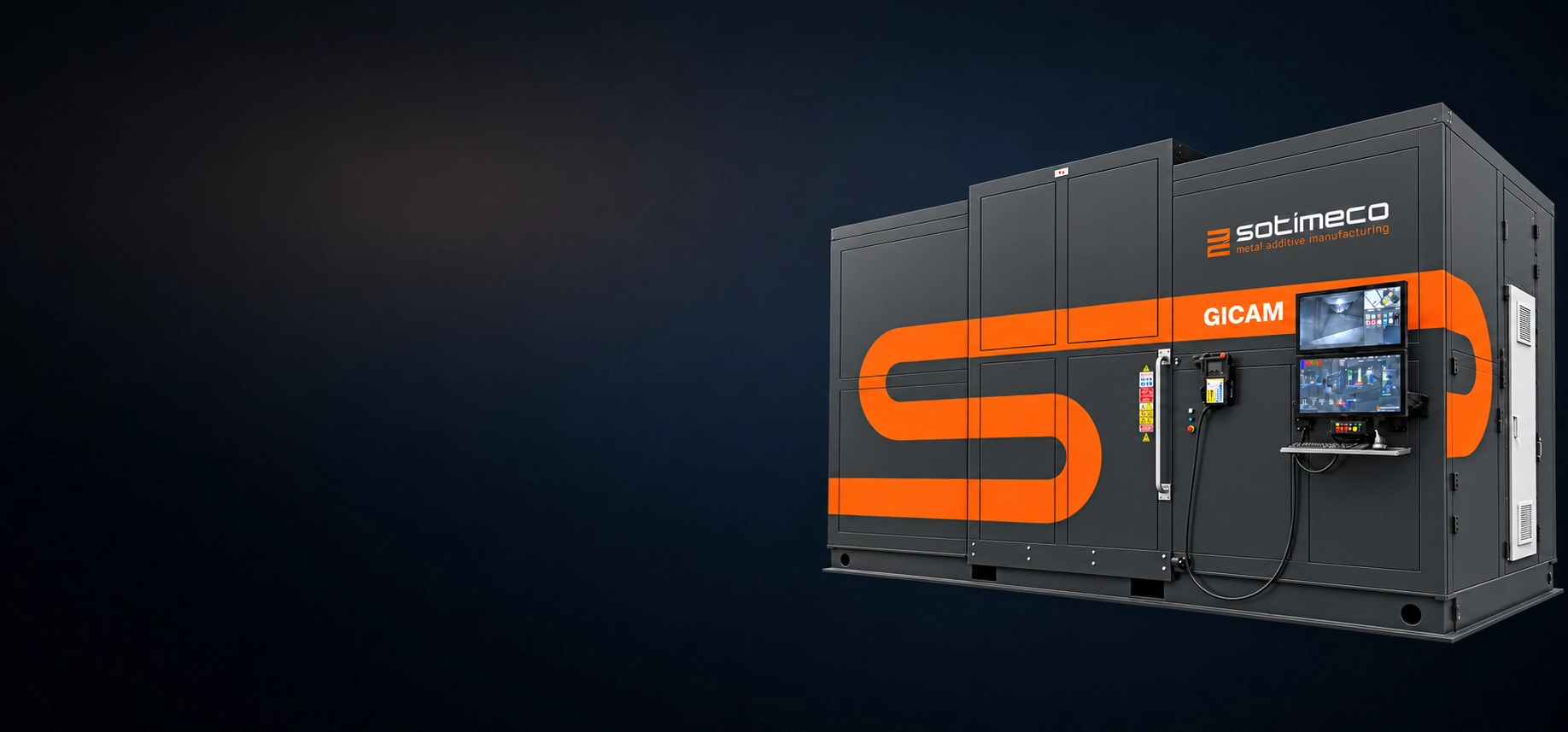
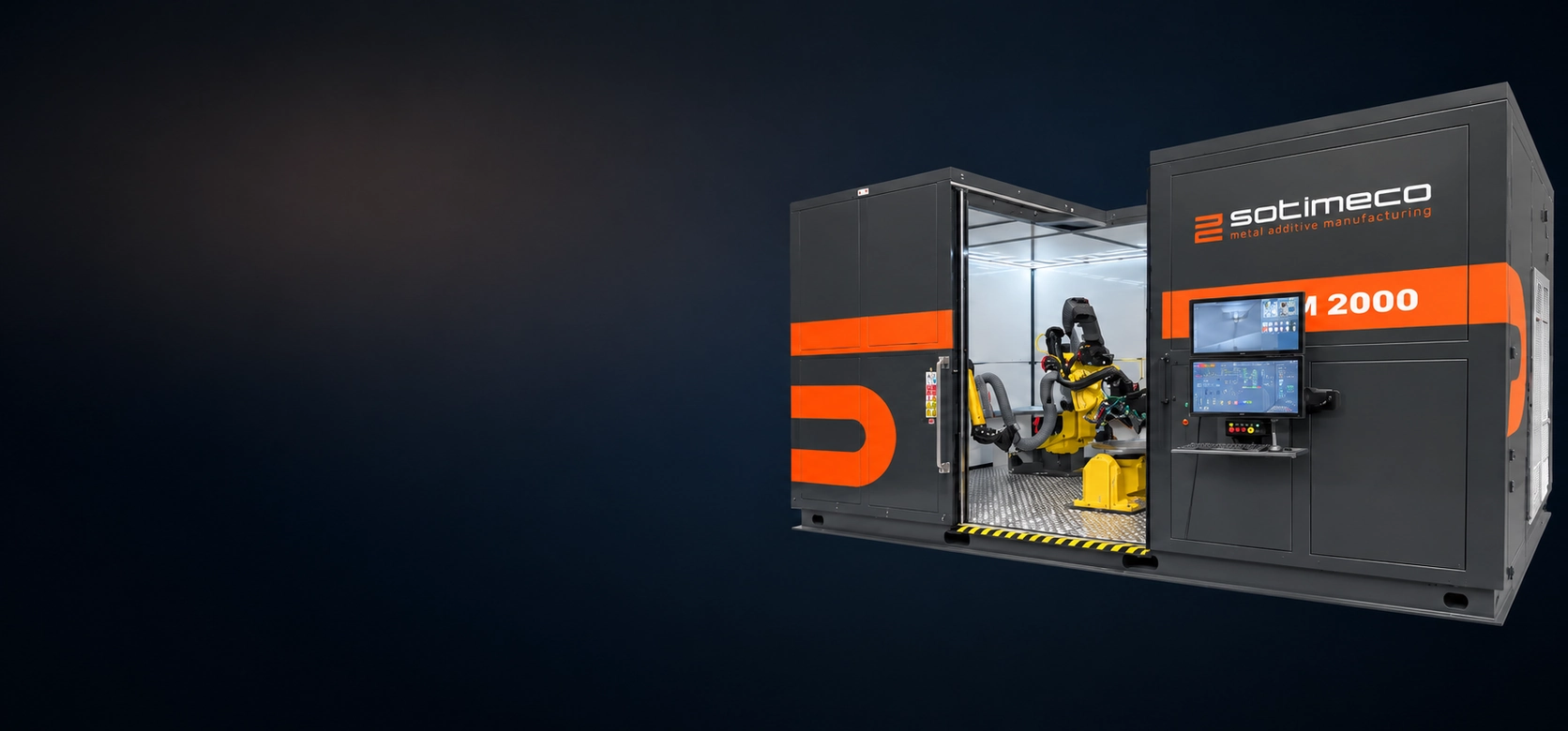
Gicam 2000

Solid or thin-walled parts, all sizes, any level of precision

La Gicam 2000 porte les capacités de la fabrication additive DED à l'échelle industrielle.
Conçue spécifiquement pour ce procédé — et non adaptée à partir d'une architecture existante — elle bénéficie d'une conception monolithique qui optimise à la fois la précision de dépôt et la simplicité d'intégration en environnement de production.
Sa capacité à traiter des pièces de 2 m³ en fait une solution idéale pour la fabrication (y compris de série) ou la réparation de pièces métalliques de toutes tailles, qu’elles soient massives ou à parois fines.
Comme toutes les solutions Sotimeco, Gicam 2000 est équipée des technologies communes à la gamme Gicam.
Printing Technology
DED laser nozzle for wire (WLAM) or powder (LMD). Patented rotary laser printing nozzle (up to 50% material savings, fast manufacturing, optimized energy consumption).
Raw material feed (powders or wires) integrated into the head, as close as possible to the process. Interchangeable laser deposition head.
Laser Technology
Diode or fiber laser, 0.5 to 3 kW (or higher as an option), red or blue wavelength.
Laser spot diameter adjustable via control panel—from 1.5 mm to 3 mm as standard, starting at 0.3 mm upon request. Adjust the deposition precision for each application without changing tools.
Patented rotating nozzle
Can be positioned in any orientation thanks to the rotary system with a standoff of >15 mm. Access to complex geometries without compromise—a decisive advantage over fixed 3-jet nozzles.
Average powder utilization: 70%.
Wire & powder — same machine
Change the print head in just a few minutes: switch from WLAM mode (wire laser, heavy parts, repairs) to LMD mode (powder laser, precision, complex alloys) without any structural modifications. Material deposition rate: up to 1.5 kg/h, depending on the material.
Dual material delivery system
Patented dual-material feeding system: powders or wires.
For each type of material, a dual powder feeder and a dual wire feeder enable the production of parts composed of two materials (for example, a steel core coated with a Stellite surface) or the creation of material blends in precise and variable proportions.
Patented multi-dispenser for powder
Plug-and-play tanks in various sizes. Simultaneous feeding of two powders (see more) with real-time adjustment of proportions—gradual composition gradients, two-component systems without abrupt interfaces.
Process Control and Management
Le logiciel embarqué SotiMind supervise et contrôle l'ensemble du process et de l'environnement : flux, pressions, débits, alimentation matière, refroidissement, gaz de protection/transport, point de rosée, l’hygrométrie, température, etc.
Real-time monitoring
Dual optical cameras (process + general monitoring), monitoring of flow, pressure, flow rate, dew point, humidity, and temperature in the powder tanks.
Remote Monitoring
It can be connected to SotiGate, Sotimeco's monitoring platform, which analyzes and displays in real time data from the machine's core and the manufacturing process.
FAO & Integration
Compatible with leading CAM software: RhinoRobot, Adaone, NX… Control interface with control panel and dual monitors.
Robotics & CNC
Fanuc robot with dual encoders (particularly well-suited for environments requiring precision and constant force).
6+2-axis technology: 6 axes for the head, allowing the print head and nozzle to be constantly reoriented to avoid the creation of time-consuming and material-intensive support structures + 2-axis positioner.
Security and Compliance
CE-certified and designed with an enclosed cabinet, limiting direct exposure to laser radiation and process fumes.
Capacities
Build volume: 2000 x 1000 x 1000 mm.
Dimensions: 5280 x 2730 x 2730 mm.
Maximum load capacity: 500 kg (standard).

FAQ

What types of parts can the Gicam 2000 process?
Is the Gicam 2000 suitable for repairing parts that are already in service?
How do you load a heavy part onto the Gicam 2000?
Does the Gicam 2000 use the same technology as the other Gicams?
Can the Gicam 2000 be monitored remotely?
What specific benefits does the patented rotary nozzle offer in terms of precision and productivity?
What is the material yield of the Gicam 2000 in powder deposition?
What impact does this yield have on a high-volume production project or a large-scale project?