Repair & Remanufacturing | Reliability Enhancement & Hardening | Manufacturing & Prototyping

Energy & Environment

Gicam technology can use DED laser cladding to repair critical components in the energy and environmental sectors, such as wind turbine shafts and hubs, turbine blades, wellheads, and process valves. It enables targeted cladding and anti-corrosion coatings on expensive equipment with long manufacturing lead times.
Reliability Improvement & Hardening

Drill pipes and BHA components

Constant contact with rock and drilling mud: Replacing worn parts extends the service life of expensive, high-value-added components.
These components are subject to severe abrasive wear (contact with rock and drilling mud) concentrated in contact areas such as tool joints and stabilizers, while the rest of the drill string is primarily subjected to mechanical fatigue.

DED enables these areas to be cladding with hard, abrasion-resistant alloys, extending the service life of costly, high-value-added components.

Repair through cladding rather than replacement is a significant economic and logistical consideration here, particularly for offshore operations where replacement involves considerable delays and logistical costs. The precise metallurgical control of DED also helps limit heat-affected zones, a critical factor for parts subjected to fatigue.

Abrasion resistance → Hard alloys deposited on contact areas (tool joints, stabilizers).
Limited heat-affected zone → Important for parts subjected to mechanical fatigue.
Drill pipes and BHA components
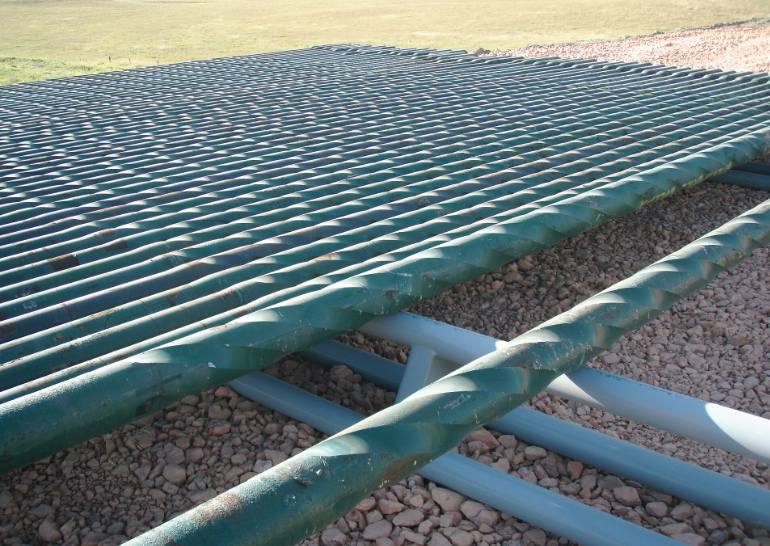
Photo: Joshua Doubek - Wikimedia Commons — CC0 1.0 — modified image

FAQ

Can DED extend the service life of a worn drill pipe?

Re-coating contact areas (tool joints, stabilizers) with a hard, abrasion-resistant alloy can significantly extend the service life of high-value-added components.

Why is this repair method beneficial in offshore operations?