Repair & Remanufacturing | Reliability Enhancement & Hardening | Fleet Availability

Mobility & Infrastructure

Gicam technology can use DED laser cladding to repair fleet components exposed to abrasive wear and impact, such as railroad wheels and axles, turnouts, bucket teeth, plow blades, and tracks. It targets only the worn area, without replacing the entire component, to minimize downtime for machinery and rolling stock.
Repair & Remanufacturing

Railway wheels: running surface and flange

Reworking reduces the diameter with each pass: rebuilding the profile by adding material extends the wheel's service life before it needs to be scrapped.
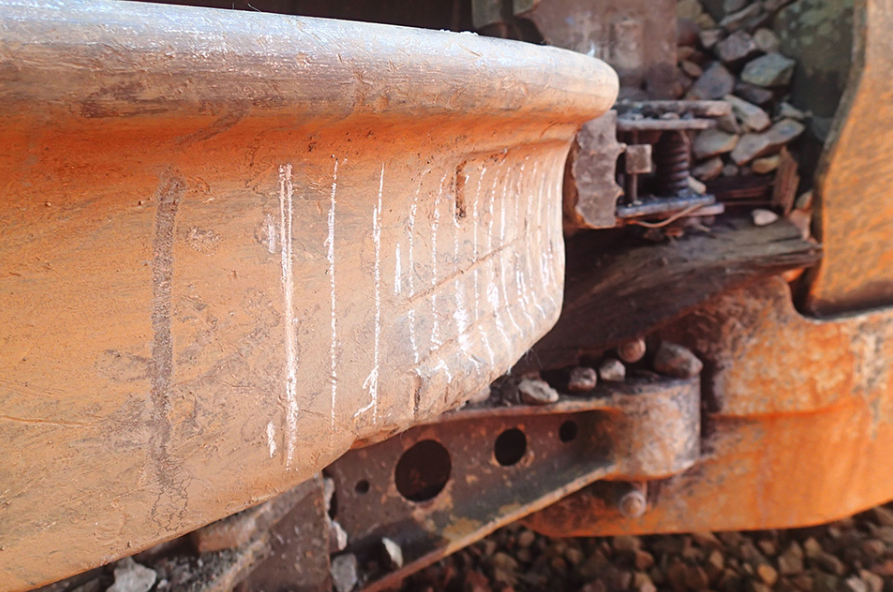
The wheel’s running surface and flange wear down gradually due to continuous friction with the rail, resulting in flat spots and profile wear that degrade ride comfort and cause vibrations, while the wheel body (rim, hub) remains intact. DED allows the running surface to be locally re-profiled using a compatible steel, restoring the standardized geometry (UIC profile or equivalent) without replacing the entire wheel—a costly forged component subject to strict railway safety requirements.

This approach to reprofiling by adding material—an alternative to simple re-machining, which reduces the diameter with each pass—significantly extends the wheel’s service life before it must be permanently scrapped. The economic stakes are high given the number of wheels in service and the frequency of maintenance operations involving under-wheel turning.

Restored standard profile → Roller bearing and flange re-surfaced, without replacing the forged wheel.
Extended service life → Reprofiling by adding material, rather than re-machining, which reduces the diameter.
Railway Wheels - Running Surface and Flange
Photo: Unknown author - Wikimedia Commons — License — modified image

FAQ

Why should you re-tire a wheel instead of regrooving it?

Turning with a wheel reduces the diameter with each pass. The addition of material restores the profile without losing diameter, which extends the wheel's service life before it needs to be discarded.

Are there any specific requirements for this repair?