Repair & Remanufacturing | Reliability Enhancement & Strengthening | Addition of Features

Defense & Naval

Gicam’s technology can repair and manufacture critical defense and naval components using DED Laser technology: armored undercarriages, propeller shafts, marine propellers, and gas turbines. It enables rapid, localized repairs, which are crucial for industrial sovereignty and operational readiness for military and naval fleets.
Adding Functions

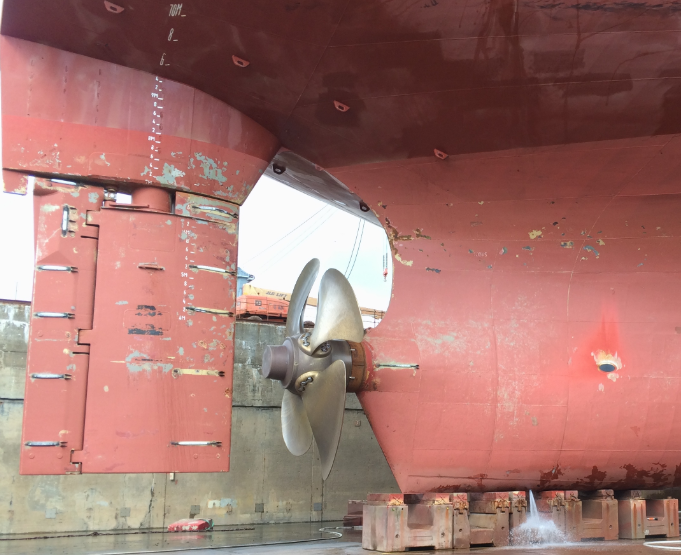
Saffron strands and rudder structures

Heavy-duty parts subjected to cyclic loading: Adding material only where necessary to an existing forged blank minimizes waste.
These massive structural components are subjected to significant cyclic mechanical stresses, with localized areas of wear or corrosion (bearing surfaces, fastening areas). DED allows functional material to be added only where necessary to an existing forged blank, thereby minimizing material waste on large parts.

The mechanical criticality of these components requires precise metallurgical inspection of the deposited weld bead. The scale of DED operations is particularly well-suited to these large parts, unlike powder bed fusion technologies—an area of development for hybrid manufacturing in shipbuilding, including military applications.

Hybrid manufacturing → Material can be added to an existing forged blank; no complete remanufacturing is required.
Large machined parts → The DED process is suited to this volume of work, unlike powder-bed fusion.
Saffron strands and rudder structures
Photo: Majus012 - Wikimedia Commons — License — modified image

FAQ

Can you add more material to a saffron strand that has already been forged?

This is the principle behind hybrid manufacturing: DED allows functional material to be added only where necessary, onto the existing forged blank.

Could this application also apply to military shipbuilding?