Repair & Remanufacturing | Reliability Enhancement & Hardening | Industrial Availability

Heavy Industry & Process

Gicam technology can use DED laser cladding to repair large, expensive components used in the steel, cement, paper, and material handling industries, such as cylinders, bands, rollers, and rollers. It targets only the worn area, without replacing the entire component, to minimize production downtime.
Repair & Remanufacturing

Forging Dies and Tools

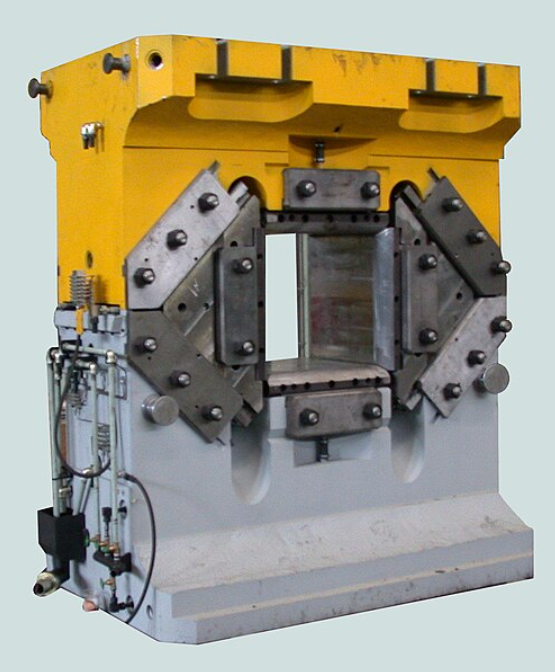
A die cavity cracked by repeated thermal shocks, while the solid block remains intact: reworking the etched area changes the economic equation.
Les cavités de matrices s'usent et se fissurent par fatigue thermique — des chocs thermiques répétés à chaque forgeage — généralement bien avant la ruine du bloc massif en acier à outils qui les porte. Le DED permet un rechargement ciblé des zones de gravure avec des aciers ou alliages plus résistants à la fatigue thermomécanique, suivi d'un réusinage aux cotes d'origine.

Cette approche évite de refaire un bloc entier, souvent très coûteux en matière et en usinage vu les grandes dimensions et la complexité des formes de gravure. Elle est aussi utilisée pour réparer des matrices en cours de vie plutôt que d'attendre leur remplacement complet, réduisant d'autant les arrêts de production liés à l'indisponibilité d'un outillage.

Engraving Repair → Targeted rebuilding of cracked areas, followed by re-machining to the original dimensions.
Fewer production stoppages → Repairs during the product's lifespan rather than waiting for a complete replacement.
Forging Dies and Tools
Photo: Ymelnikov - Wikimedia Commons — License — modified image

FAQ

Is it possible to repair a cracked forging die without replacing the entire block?

Yes, the DED process only rebuilds the cracked machined area, followed by re-machining to the original dimensions, without remanufacturing the entire solid block.

Can this repair be performed while the tool is still in use, before it completely breaks down?