Precision Manufacturing | Porous Structures | Customization on a Per-Unit Basis

Health

Gicam technology can use DED laser manufacturing to produce biological features that are difficult to achieve by other means: gradient-porous structures, bifunctional surfaces, and implants customized to the patient’s anatomy. Here, the focus is less on repair and more on precision manufacturing, in accordance with biocompatibility requirements and regulatory traceability standards.
  • Home
  • Health
  • Knee Implants: Femoral and Tibial Components
Adding Functions

Knee Implants: Femoral and Tibial Components

A porous surface for bone attachment on one side, a smooth, hard bearing surface on the other: two conflicting requirements in a single part.
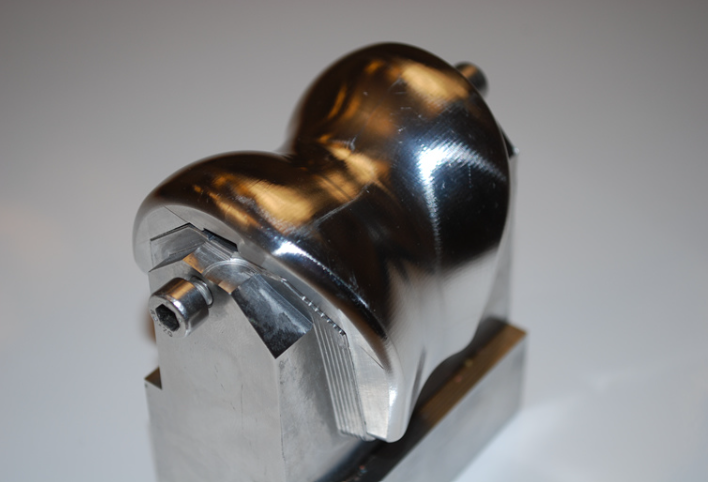
These implants require a porous surface for bone attachment on their inferior/posterior side, which comes into contact with the resected bone, while maintaining a perfectly smooth and hard bearing surface on the articular side to limit wear on the polyethylene due to friction. DED technology makes it possible to combine these two conflicting requirements in a single component: a porous structure on one side for osseointegration, and a dense, wear-resistant coating on the other for the articular surface.

This ability to integrate two functions into a single component, with a controlled transition between them, is a strong advantage over traditional manufacturing processes (casting + surface coating). The key issue is the implant’s durability, a critical factor given the increase in patients’ life expectancy and, consequently, the length of time the prosthesis will be under stress.

Two functions, one component → A porous surface for bone attachment and a dense, hard articular surface.
Smooth transition → No added coating after casting.
Knee Implants - Femoral and Tibial Components
Photo: Sescoi CAD/CAM - Wikimedia Commons — License — modified image

FAQ

Why does a knee implant need two different surfaces?

A porous surface promotes bone integration, while a smooth, hard articular surface limits wear on the polyethylene due to friction.

Why is sustainability becoming an increasingly important issue?