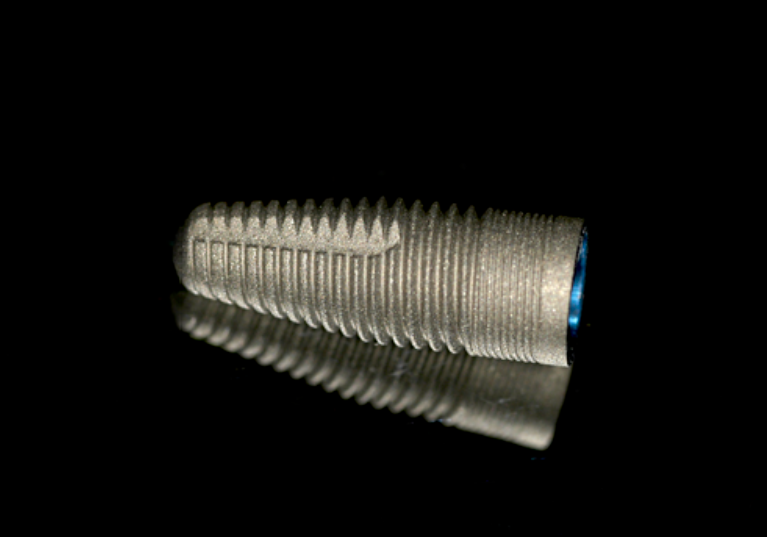
A functional surface texture that promotes rapid osseointegration, created directly during the manufacturing process: a key differentiator in a competitive market.
These implants, which are inserted into the alveolar bone to support a dental prosthesis, require a rough or porous surface on their threaded portion to promote rapid osseointegration, a key factor in long-term clinical success.
DED allows this functional surface texture to be produced directly during manufacturing, without the additional sandblasting or acid etching steps typically used to roughen the surface.
This approach is particularly valuable for the production of small batches or specific geometries (short implants, zygomatic implants for complex cases), which are less standardized than mass-market dental implants. The key challenge here is not only biological performance (speed and quality of osseointegration) but also product differentiation for manufacturers in a highly competitive market.