
Repair & Remanufacturing | Reliability Enhancement & Hardening | Fleet Availability

Mobility & Infrastructure

Gicam technology can use DED laser cladding to repair fleet components exposed to abrasive wear and impact, such as railroad wheels and axles, turnouts, bucket teeth, plow blades, and tracks. It targets only the worn area, without replacing the entire component, to minimize downtime for machinery and rolling stock.
Repair & Remanufacturing

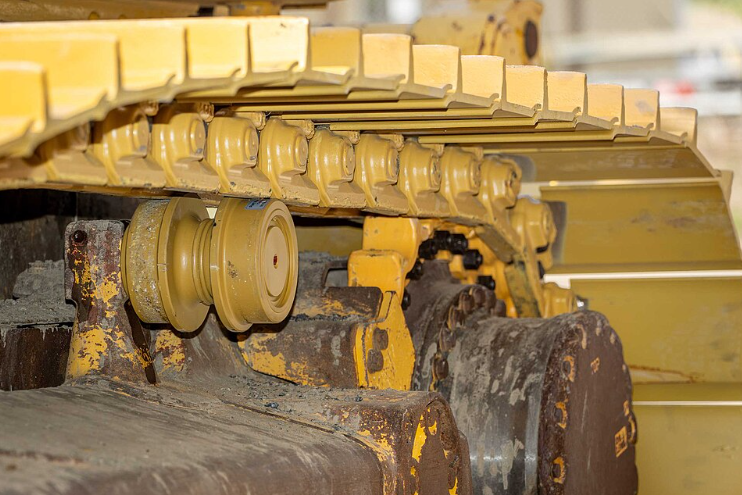
Rollers, sprockets, and track components

Severe abrasive wear on the bearing surfaces, but the internal structure is largely unaffected: rebuild rather than replace a heavy cast component.
These undercarriage components are subject to intense abrasive wear from contact with the ground and the track, with stress concentrated on the bearing surfaces while the internal structure remains largely unaffected. DED enables targeted cladding of these surfaces with wear-resistant alloys, offering a cost-effective alternative to the complete replacement of heavy components that are expensive to produce via casting.

This repair method is particularly relevant for fleets of construction or forestry machinery, where the undercarriage accounts for a significant portion of maintenance costs. The process also allows for localized adjustment of the deposited hardness depending on the type of terrain (rocky, muddy, forested)—a level of flexibility that is difficult to achieve with traditional cladding processes such as arc cladding.
Targeted surfacing → Surfaced bearing surfaces, without replacing a heavy cast component.
Hardness adjusted to the terrain → Rocky, muddy, or forested: a flexibility not found in bow reloading.
Rollers, sprockets, and track components
Photo: Urjamten - Wikimedia Commons — License — modified image

FAQ

Why is the undercarriage an important maintenance item?

Because abrasive wear caused by contact with the ground is severe and concentrated on the running surfaces, it accounts for a significant portion of the maintenance costs for a fleet of machines.

Can the specified hardness be adjusted to suit the site conditions?