
Repair & Remanufacturing | Reliability Enhancement & Hardening | Fleet Availability

Mobility & Infrastructure

Gicam technology can use DED laser cladding to repair fleet components exposed to abrasive wear and impact, such as railroad wheels and axles, turnouts, bucket teeth, plow blades, and tracks. It targets only the worn area, without replacing the entire component, to minimize downtime for machinery and rolling stock.
Repair & Remanufacturing

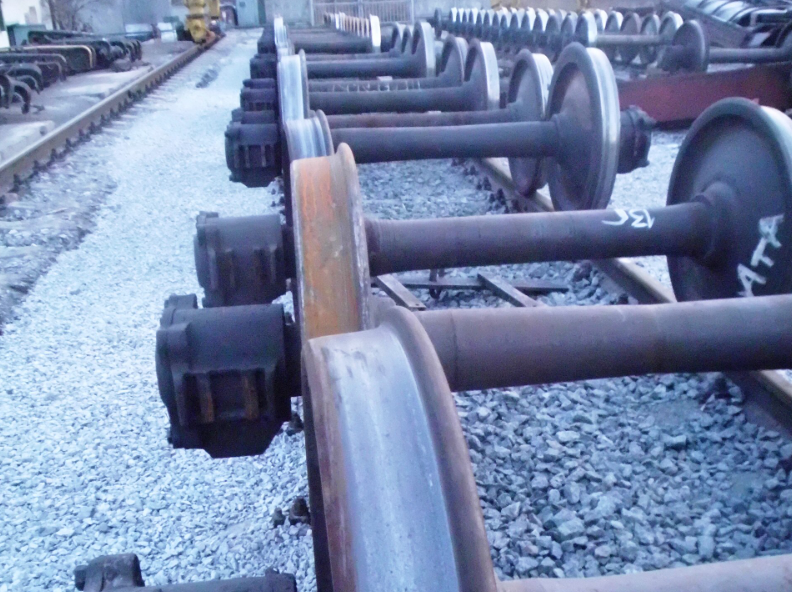
Railway Axles: Bearing and Spacer Clearances

Safety-critical dimensions on a part that is expensive to replace: re-machining to restore the nominal dimension without compromising the fatigue limit.
These solid forged axles are subject to localized wear or corrosion at the bearing seats and wheel mounting surfaces—critical areas in terms of safety given the cyclic loads and fatigue risks. DED allows for the precise rebuilding of these surfaces to restore them to their nominal dimensions, offering an alternative to replacing a forged axle—a process that involves long manufacturing lead times and requires strict non-destructive testing (magnetic particle testing, ultrasonic testing) before the axle can be returned to service.

This certified repair process is subject to stricter constraints than in other sectors due to railway safety standards (approval by the relevant authorities), but offers significant economic potential given the high unit cost and downtime associated with replacing an axle. Precise control of the heat input is essential to avoid compromising the part’s fatigue limit, a key consideration in railway design.
Nominal dimension restored → Bearing and shim seats re-machined, without replacing the forged axle.
Fatigue resistance maintained → Controlled heat input, a key consideration in railway design.
Railway Axles — Bearing and Spacer Clearances
Photo: Ural-66 - Wikimedia Commons — License — modified image

FAQ

Is a repaired axle subject to inspections before being put back into service?

Yes: strict non-destructive testing (magnetic particle testing, ultrasonic testing) and approval by the relevant authorities, as is required for any railway safety agency.

Why is thermal control so important on an axle?