Repair & Remanufacturing | Reliability Enhancement & Hardening | Fleet Availability

Mobility & Infrastructure

Gicam technology can use DED laser cladding to repair fleet components exposed to abrasive wear and impact, such as railroad wheels and axles, turnouts, bucket teeth, plow blades, and tracks. It targets only the worn area, without replacing the entire component, to minimize downtime for machinery and rolling stock.
Reliability Improvement & Hardening

Railway Brake Discs and Drums

A massive disc that is costly to remanufacture, with wear limited solely to its friction surfaces: an emerging approach, guided by the requirements of railway braking.
These braking components undergo cyclic thermomechanical wear on their friction surfaces, sometimes resulting in thermal fatigue cracking due to repeated high-energy braking (high-speed trains, heavy freight), while the hub or the disc’s supporting structure remains intact. DED enables the localized cladding of degraded friction zones with an alloy that is more resistant to thermal fatigue, thereby extending the service life of solid discs that are costly to remanufacture.

This approach is still in its early stages for this type of component, given the specific safety and qualification requirements of railway braking, but it offers real potential for reducing the replacement rate of high-value components. DED also enables hybrid designs that combine a standard body with a locally optimized friction material.

Relaid friction surfaces → Alloy with higher resistance to thermal fatigue, without having to remanufacture the disc.
Hybrid architectures → Standard body combined with a locally optimized friction material.
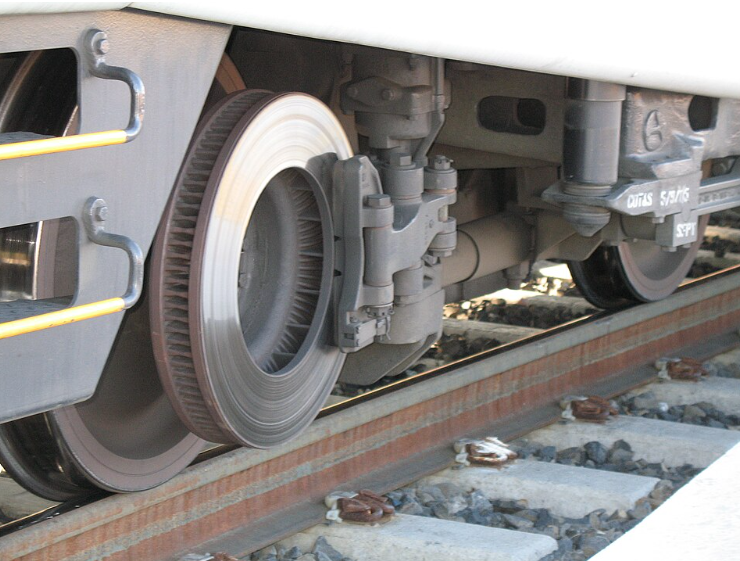
Railway Brake Discs and Drums
Photo: Richard Masoner - Wikimedia Commons — License — modified image

FAQ

Has this application already been implemented in railroad braking systems?

It is still an emerging technology for this type of component, given the safety and performance requirements for railway braking systems; it is qualified on a case-by-case basis with the customer.

What is the point of re-padding a brake disc?