Repair & Remanufacturing | Reliability Enhancement & Strengthening | Addition of Features

Defense & Naval

Gicam’s technology can repair and manufacture critical defense and naval components using DED Laser technology: armored undercarriages, propeller shafts, marine propellers, and gas turbines. It enables rapid, localized repairs, which are crucial for industrial sovereignty and operational readiness for military and naval fleets.
Reliability Improvement & Hardening

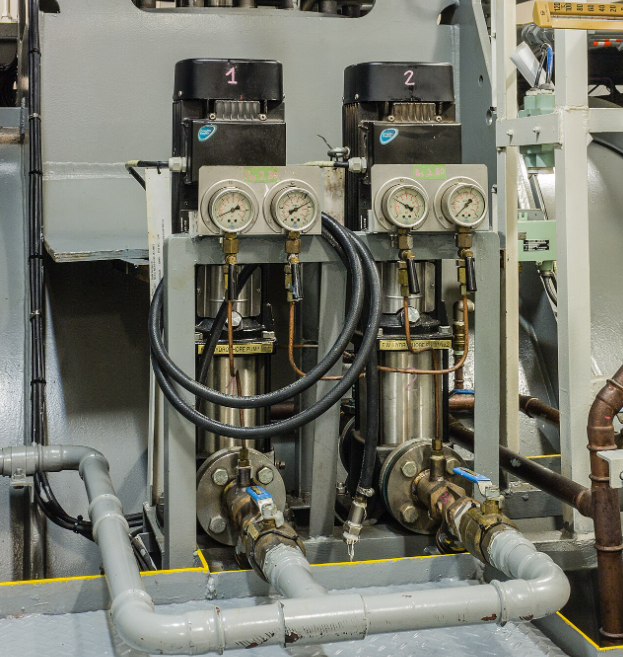
Seawater valve bodies and pumps

Valve seats and areas where water flows at high speeds: Locally applying a noble alloy to a less expensive base material optimizes material costs.
These components are exposed to severe corrosion and cavitation erosion at the valve seats and in areas where water flows at high speeds. DED allows for the localized deposition of a corrosion-resistant alloy (such as Inconel or duplex) onto a valve body made of a less noble steel, thereby optimizing material costs.

The complex internal geometry of these parts (channels, conical seats) benefits from the flexibility of laser cladding. This repair method avoids the often-costly complete replacement of parts critical to the ship’s propulsion or safety—a typical application of functional multi-material repair.

Optimization of material costs → Precious metal alloy deposited only on exposed areas; body made of standard steel.
Complex Geometries → The flexibility of laser deposition allows it to adapt to internal conical channels and seats.
Seawater valve bodies and pumps
Photo: Dominicus Johannes Bergsma - Wikimedia Commons — License — modified image

FAQ

Why apply a noble alloy only to certain areas of the valve body?

To minimize material costs: the body can remain made of standard, less expensive steel; only the corrosion-resistant alloy (Inconel, duplex) is applied where seawater actually comes into contact with the surface.

Is the DED suitable for the complex internal geometries of these parts?