
Repair & Remanufacturing | Reliability Enhancement & Hardening | Manufacturing & Prototyping

Energy & Environment

Gicam technology can use DED laser cladding to repair critical components in the energy and environmental sectors, such as wind turbine shafts and hubs, turbine blades, wellheads, and process valves. It enables targeted cladding and anti-corrosion coatings on expensive equipment with long manufacturing lead times.
Reliability Improvement & Hardening

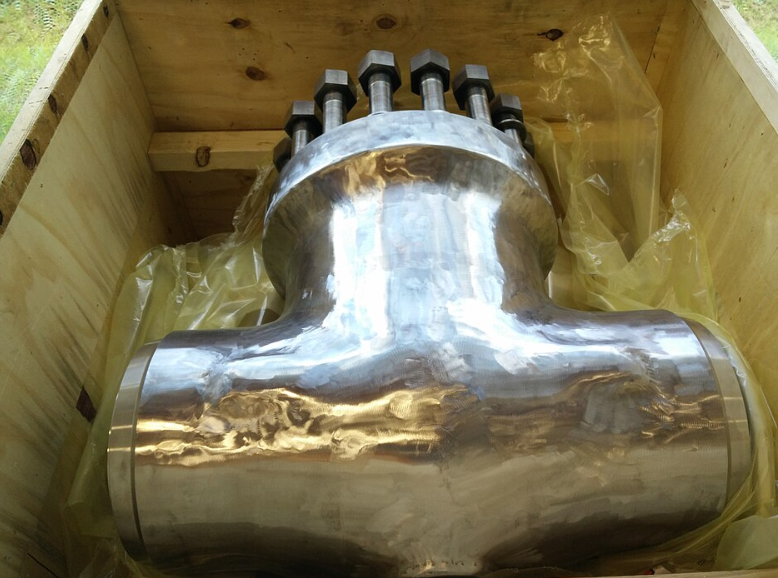
Valve bodies for thermal and nuclear power plants

Sealing against high-pressure steam or nuclear primary fluid: a precision coating on the sealing surfaces, a standard steel body for the structure.
These critical components must maintain a seal under extreme pressure and temperature conditions (high-pressure steam, nuclear primary coolant), which justifies the application of a wear- and corrosion-resistant coating exclusively on the sealing surfaces.

DED allows for the deposition of alloys such as Stellite or Inconel onto these specific functional areas, while retaining a less expensive steel body for the structure.

This hybrid approach is particularly valued in the nuclear industry, where metallurgical traceability and process qualification are strictly regulated, but where DED offers superior control and reproducibility compared to manual cladding. It also enables the repair of existing valves while they are in service—a major advantage given the costly reactor shutdowns associated with replacement.
Optimized material cost → Precious metal alloy deposited only on the sealing surfaces.
In-Service Repairs → Existing valves can be repaired without waiting for a complete unit shutdown.
Valve bodies for thermal and nuclear power plants
Photo: Tpe.g5.stan - Wikimedia Commons — CC0 1.0 — modified image

FAQ

Is DED certified for valves used in nuclear power plants?

Yes, the hybrid approach (Stellite/Inconel coating on sealing surfaces) meets the industry's traceability and qualification requirements—however, final qualification will depend on the customer's specifications.

Why apply the alloy only to the sealing surfaces?