Repair & Remanufacturing | Reliability Enhancement & Hardening | Manufacturing & Prototyping

Energy & Environment

Gicam technology can use DED laser cladding to repair critical components in the energy and environmental sectors, such as wind turbine shafts and hubs, turbine blades, wellheads, and process valves. It enables targeted cladding and anti-corrosion coatings on expensive equipment with long manufacturing lead times.
Repair & Remanufacturing

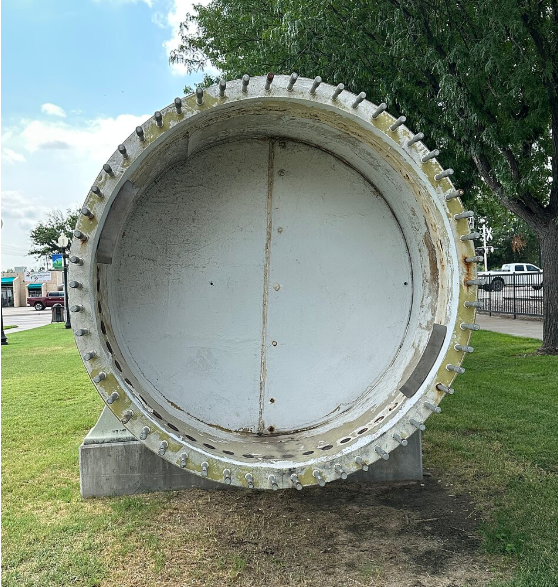
Wind Turbine Blade Connection Components

A metal insert that has deteriorated at the base of an expensive composite blade: repair the affected area rather than scrap the entire blade.
The metal inserts embedded in the composite at the blade root, as well as their contact surfaces with the hub, can be subject to fretting wear, corrosion, or localized fatigue due to cyclic loads and vibrations transmitted by the blade.

DED enables the deposition of a suitable alloy onto the degraded areas of these metal inserts, thereby extending the service life of components integrated into the blade’s composite structure.

A complete replacement often involves scrapping the entire blade—a significant economic challenge given the very high unit cost of blades, particularly for large offshore blades. Precise control of the deposit allows for the restoration of the assembly tolerances necessary for the fatigue resistance of the blade-hub joint, an area subject to particularly high mechanical stress.

Blade intact → Repair of the metal insert is possible without scrapping the entire composite blade.
Restored assembly tolerances → Fatigue strength of the blade-hub connection must be maintained.
Wind Turbine Blade Connection Components
Photo: Nolabob - Wikimedia Commons — CC0 1.0 — modified image

FAQ

Should a wind turbine blade be scrapped if a blade root insert is damaged?

Not necessarily: the DED can rebuild the damaged area of the metal insert, preventing the entire composite blade from being scrapped.

Is this repair method suitable for large offshore blades?