Repair & Remanufacturing | Reliability Enhancement & Hardening | Manufacturing & Prototyping

Energy & Environment

Gicam technology can use DED laser cladding to repair critical components in the energy and environmental sectors, such as wind turbine shafts and hubs, turbine blades, wellheads, and process valves. It enables targeted cladding and anti-corrosion coatings on expensive equipment with long manufacturing lead times.
Reliability Improvement & Hardening

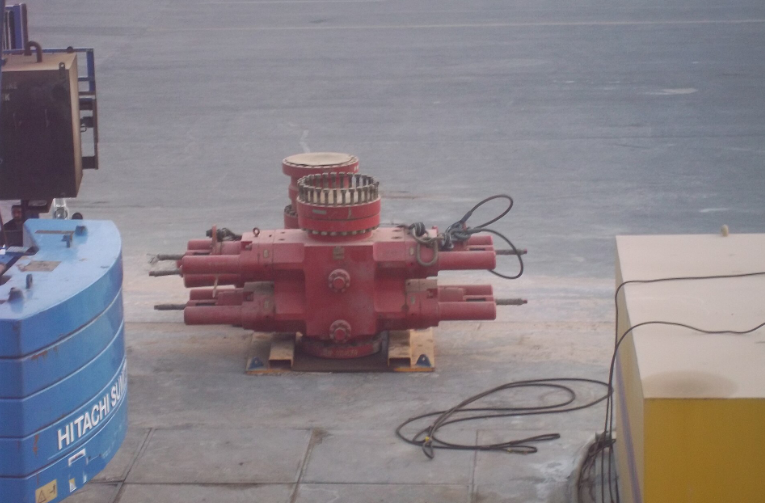
BOP (Blowout Preventer) Caps and Bodies

Critical safety equipment made of very thick forged steel: qualified repair rather than replacement—a major economic consideration.
This critical safety equipment, typically made of very thick forged steel, exhibits localized areas of wear or corrosion on the sealing surfaces and those in contact with moving parts. DED enables these specific areas to be cladding with high-performance alloys, while meeting the certification and metallurgical traceability requirements specific to this safety equipment (API 6A/16A).

DED-qualified repair, rather than replacement, represents a major economic benefit given the very high unit cost of these parts. The process also allows for better control of the hardness gradient and the heat-affected zone, which is essential for maintaining the mechanical properties required by industry standards.

Certified Repair → Designed to meet the traceability requirements of API 6A/16A.
Controlled hardness gradient → Mechanical properties to be maintained in accordance with industry standards.
BOP (Blowout Preventer) Caps and Bodies
Photo: Ciacho5 - Wikimedia Commons — CC0 1.0 — modified image

FAQ

Can DED repair of a BOP component meet certification standards?

The approach is specifically designed to meet the traceability and API 6A/16A qualification requirements specific to this safety equipment—final certification will depend on the specifications and the relevant certification body.

Why repair a BOP component rather than replace it?