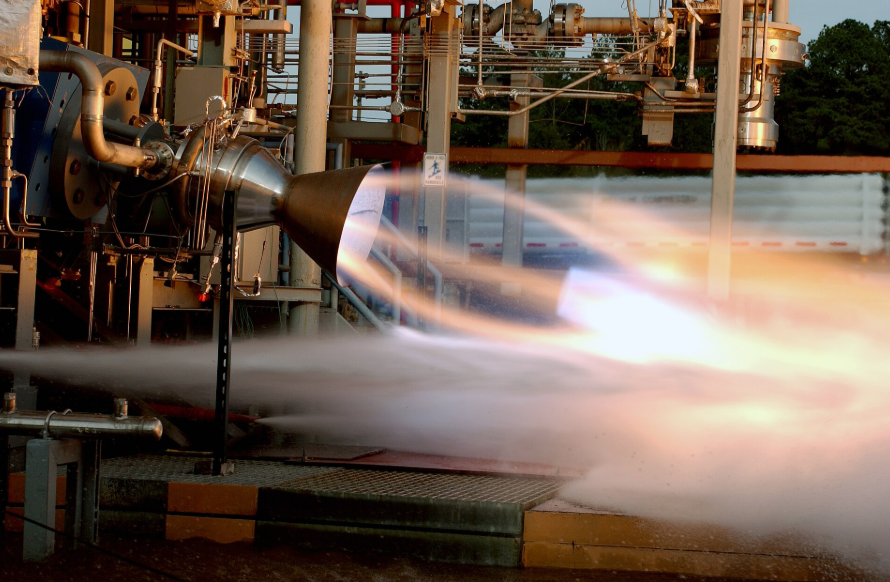
Complex geometries, stringent thermal requirements, and combined materials: a natural playground for multi-material deposition.
These parts combine complex geometries, stringent thermal requirements, and—often—combinations of different materials depending on the area—for example, copper for thermal conductivity and a refractory alloy for mechanical strength. Thanks to its patented rotating nozzle, Gicam can deposit layers of different materials depending on the part’s functional zones, even on complex geometries that are difficult for a conventional fixed nozzle to access.
DED can also be used to repair eroded or cracked areas without having to remanufacture the entire component—a significant advantage for parts that are costly and time-consuming to fully remanufacture. This type of application is particularly relevant in the aerospace sector, specifically for rocket engines, where rapid development cycles highlight the flexibility of
DED: iterating on a nozzle geometry without having to start over with dedicated casting tooling represents a significant time savings.
The technology’s geometric flexibility is a major advantage when dealing with the complex shapes of these components, where conventional processes often require costly design compromises.