Titanium is an expensive material that is difficult to machine: reducing the amount of material purchased relative to the final product directly changes the economic equation for these parts.
DED excels at producing this type of part: the near-net-shape deposition process limits the amount of purchased material to only what is actually needed, rather than starting with a solid block that must be machined. Unlike powder bed fusion, which is limited in terms of production volume,
Gicam technology has no intrinsic size limit—the standard range (
Gicam 600,
Gicam 2000) covers common needs, and Sotimeco can design custom machines for
non-standard volumes.
In practice, the part starts as a conventional forged blank, and
DED adds only the material needed for complex areas—bulges, reinforcements, and fastening interfaces—rather than machining them from solid. The savings in final machining time are significant for this type of large-scale structure, and the “buy-to-fly” ratio (purchased material to final material) is significantly improved—a key economic consideration for a material as expensive as titanium.
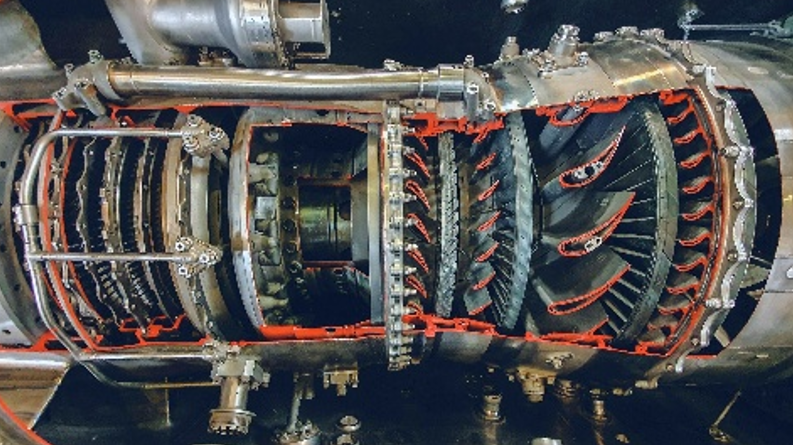
This approach applies equally to compressor housings and nacelle components—two categories of parts where the weight-to-strength trade-off is critical and where every kilogram of titanium saved has a direct impact on production costs.