
Repair & Remanufacturing | Reliability Enhancement & Hardening | Industrial Availability

Heavy Industry & Process

Gicam technology can use DED laser cladding to repair large, expensive components used in the steel, cement, paper, and material handling industries, such as cylinders, bands, rollers, and rollers. It targets only the worn area, without replacing the entire component, to minimize production downtime.
Repair & Remanufacturing

Axles and Pulleys for Cranes and Lifting Equipment

Tight fit tolerances on a heavily loaded joint: a safety issue subject to strict regulations.
These pivot points—boom, mast, and pulleys—experience gradual wear on their diameters due to continuous friction within their bushings or bearings, under high loads and significant cyclic stresses. The DED allows for the precise rebuilding of the worn section to restore it to its nominal dimension, offering a cost-effective alternative to replacing a forged shaft—which is often specific to each crane model and not always readily available from stock.

This repair is particularly relevant for fleets of mobile or port cranes, where the downtime of a machine results in significant direct operating costs. Precise control of the deposited thickness ensures compliance with the tight fit tolerances specific to these heavily loaded mechanical connections—a critical factor for the safety of this equipment, which is subject to strict regulations.
Back to the nominal size → An economical alternative to a specific forged shaft, which is not always in stock.
Fitting tolerances are met → A critical safety issue on these heavily trafficked routes.
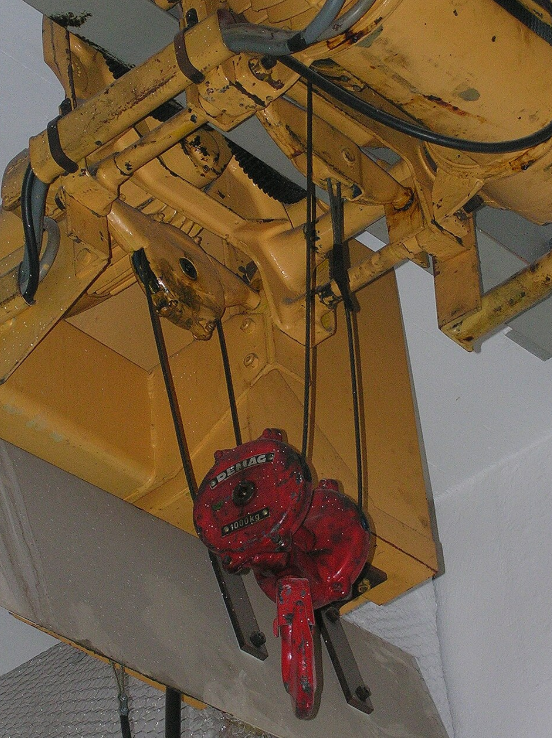
Axles and Pulleys for Cranes and Lifting Equipment
Photo: Audriusa - Wikimedia Commons — License — modified image

Key Takeaways…
Gicam technology can use DED laser cladding to restore the pivot pins of cranes and lifting equipment to their nominal dimensions, offering a cost-effective alternative to replacing forged pins—which are often model-specific. Precise control of the deposited thickness ensures compliance with the tight fit tolerances specific to these mechanical connections, which are subject to strict regulations (CACES, periodic inspections).

FAQ

Does a repaired crane axle still meet regulatory requirements (CACES, periodic inspections)?

The purpose of precise control over the deposited thickness is to ensure compliance with the tight fit tolerances specific to these mechanical connections, which are subject to strict regulations—final compliance must still be validated in accordance with the standards applicable to your equipment.

Why is it difficult to replace a crane axle quickly?