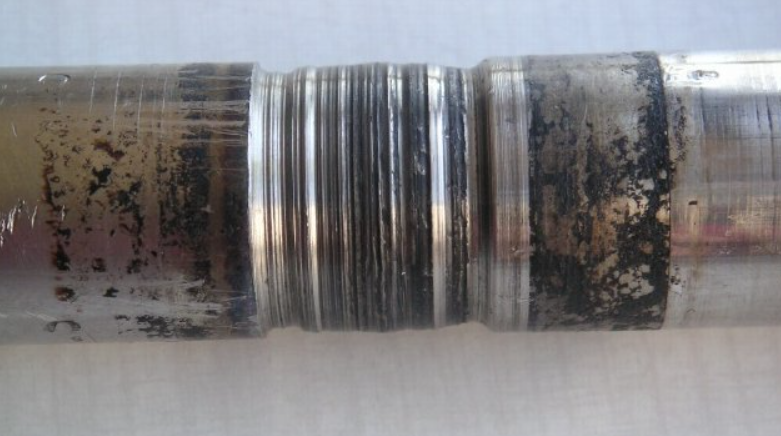
A precision shaft that is costly to replace, worn only at its bearing seats: re-shaft it and then re-machine it to the original tolerances, as part of a remanufacturing process.
These shafts experience localized wear at the bearing seats, mechanical seal seats, and areas of contact with wear rings, or become scratched during operation, while the rest of the shaft retains its dimensional and mechanical integrity.
DED allows these worn or corroded areas to be precisely built up to restore them to their nominal dimensions, followed by re-machining to the original tolerances—a far less expensive alternative than replacing a shaft machined from a specific steel or alloy, which can sometimes involve long lead times.
This repair method is a staple of industrial maintenance, having already been performed using older processes (metal spraying, TIG cladding), but
DED provides a superior metallurgical bond and less dilution—essential for the fatigue life of a rotating component—as well as precise adherence to the concentricity tolerances required for dynamic balancing. It is part of a remanufacturing approach for large industrial or mobile equipment (construction and agricultural machinery), prevents the scrapping of high-value steel shafts, and reduces the environmental footprint compared to manufacturing new parts.